
For Advocates & Changemakers · Allyship

What does it mean to be an ally?

Allyship isn’t a title you give yourself. It’s something you do, again and again, especially when it’s uncomfortable. This page is my starting place for that conversation in surgery and medicine.

Allyship in surgery and medicine

In medicine, allyship shows up in small moments and in structural ones: who gets introduced by title, who gets credit on rounds, who is in the room when decisions are made, and who speaks up when a comment in the OR lands on someone who can’t safely answer back.

To me, being an ally means listening first, using whatever standing I have to make room for others, and staying in the work when it costs something. It also means expecting to get things wrong sometimes, and being willing to be corrected.

I’m still learning what this asks of me. Below are a colleague’s call to action, voices I return to, the community I organize with, and reading for anyone who wants to go further.

Dr. Carla M. Pugh on allyship

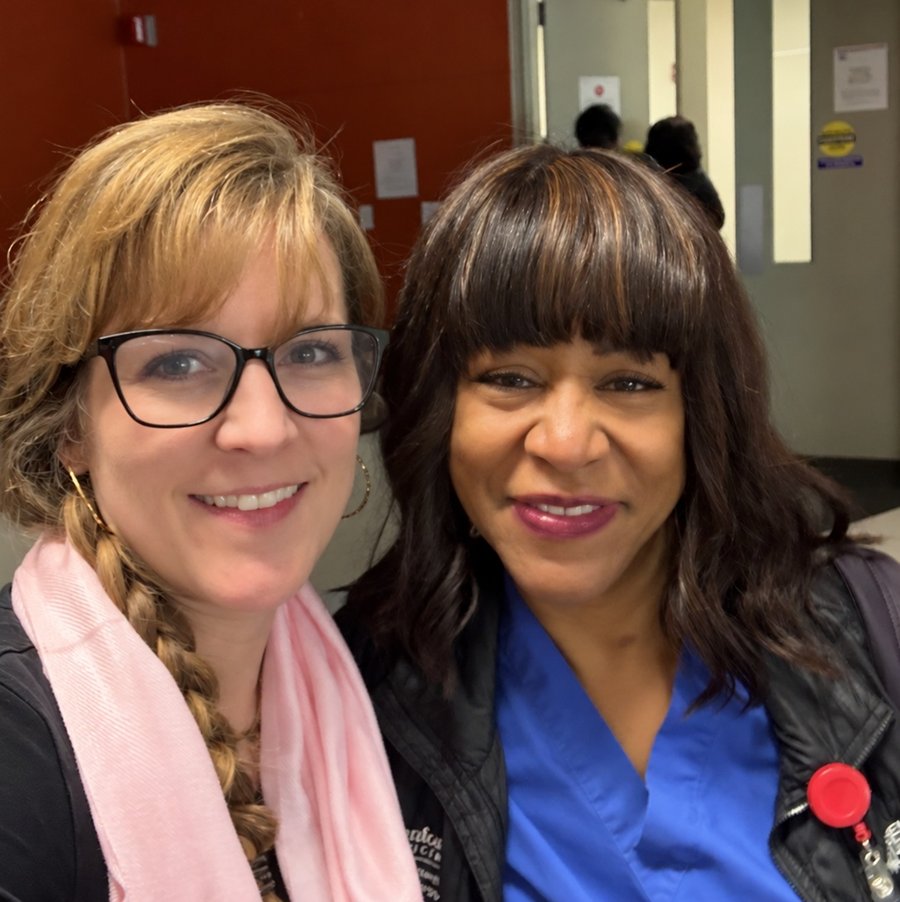
Heather Logghe, MD, with Dr. Carla M. Pugh
With Dr. Carla M. Pugh, SBAS president 2021–2022, at Stanford, October 2026.

In “Allyship in Action,” an excerpt from her 2022 Society of Black Academic Surgeons (SBAS) presidential address published in The American Journal of Surgery in 2023, Dr. Pugh makes the case that allyship is the critical, missing link to crossing the quality chasm in health care.

Words I return to

Allies are in AOSA’s name

The Association of Out Surgeons & Allies (AOSA) brings together LGBTQ+ surgeons, trainees, and allies, and allies have been part of it from the very first meeting.

AOSA’s Education & Outreach Committee lists among its goals creating educational content on “how to be a good ally within the surgical profession.” Allies are welcome to join, and committee members can sign up on a rolling basis.

The cost of staying silent

When I think about allyship in surgery, I think about who feels safe enough to be fully seen at work. This short perspective in the Annals of Surgery lays out what it costs LGBTQ+ trainees and faculty when they don’t, and what the rest of us can do about it.

Featured article

Beyond the Scalpel: Tackling Challenges Faced by LGBTQ+ Surgical Trainees and Faculty

Xie S, Schlussel A, Shao J. Annals of Surgery. 2025;282(2):196–198. Free full text.

The authors describe LGBTQ+ surgeons as a “silent” minority. In survey data from the 2019 American Board of Surgery In-Training Examination, 59.2% of LGBTQ+ surgical trainees reported discrimination, compared with 42.3% of their non-LGBTQ peers, and 47.5% reported sexual harassment, compared with 29.3%. In a separate study, 89% of LGBTQ+ surgery residents did not disclose their identity when applying for residency.

They also describe the toll of constant self-monitoring and code-switching to avoid being seen as “too gay,” a cumulative strain that can take up a clinician’s “mental bandwidth” and compromise patient care. Their fixes span the individual, institutional, and systemic levels: correct pronouns and inclusive language, bias and bystander training, enforced nondiscrimination policies, mentorship networks, and membership in organizations like AOSA.

Key takeaway: Silence isn’t neutral, and the person staying silent shouldn’t have to carry its cost alone. Each of us can make it safer to be seen, from the pronouns we use to the policies we enforce.

This work is better done together

If you’re thinking about what allyship looks like where you work, I’d love to hear from you.