Learning to think like a surgeon, and learning to be recognized as one.
What does it mean to become competent as a surgeon? How do we teach the knowledge, reasoning, and communication that safe practice requires? And how do we know that the way we assess trainees recognizes those abilities accurately?
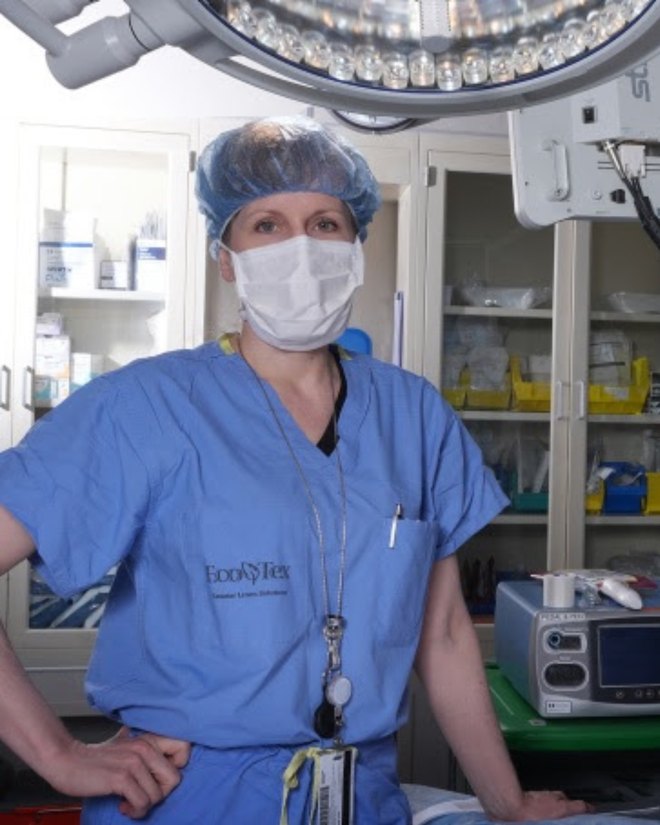
Surgical training carries an enormous hidden curriculum: how competent surgeons are expected to think, speak, prioritize, communicate, behave, and present themselves. Some of those expectations are necessary for safe clinical practice. Others reflect longstanding professional conventions, institutional hierarchies, and cultural assumptions. Most of them are implicit. Learners are expected to acquire them through observation, feedback, socialization, and trial and error.
The hidden curriculum doesn’t simply teach us how to be surgeons. It teaches us how to be recognized as competent surgeons.
Those who intuitively understand the conventions of surgical culture may have an advantage that is easily mistaken for greater clinical ability. Those who do not may be perceived as less competent, even when their underlying knowledge and judgment are sound. We may be rewarding familiarity with the hidden curriculum while believing we are rewarding clinical competence.
This does not mean that everyone who struggles to demonstrate competence possesses it. Nor does it mean that communication, organization, confidence, and professional behavior are irrelevant to patient care. It means we need to be much more precise about what we are teaching, what we are assessing, and what conclusions we draw from performance. That is the educational question at the center of this work. It is also an equity question.
Four processes, not one
Surgical education tends to treat competence as a single thing a learner either has or lacks. It is more useful to distinguish four related processes. The first three are abilities the learner must develop. The fourth also depends on the people and systems doing the evaluating.
-
Acquiring knowledge
What do I know?
Developing the foundational knowledge of anatomy, physiology, pathology, diagnosis, treatment, and operative management.
The learner’s work -
Developing clinical judgment
Can I apply what I know?
Interpreting clinical findings, recognizing patterns, prioritizing competing concerns, managing uncertainty, anticipating complications, and making appropriate decisions.
The learner’s work -
Demonstrating competence
Can I make my reasoning and decisions visible to others?
Organizing an assessment, articulating a management plan, communicating priorities, explaining decisions, and performing the practical skills safe patient care requires.
The learner’s work -
Being recognized as competent
Do the people evaluating me recognize the competence I am demonstrating?
This process introduces the observer, the institution, and the surrounding professional culture. Recognition is shaped not only by what the learner knows and does, but by expectations about how competent people are supposed to communicate and behave.
Also the evaluator’s work
Not a ladder. Knowledge, judgment, and the ability to show your reasoning grow together and feed one another; a diagram simplifies what the writing around it can hold.
All four are important, but they are not interchangeable, and one of the central problems in medical education is that we often fail to distinguish among them. We teach knowledge explicitly. We expect clinical judgment to develop through experience. We assess competence through observable performance. And we assume that our recognition of competence is an accurate reflection of the underlying ability.
Each of those assumptions deserves examination.
#FOAMsurg and Think Like a Surgeon
#FOAMsurg
Free, open-access surgical education, in the tradition of #FOAMed. The aim is not to deliver more facts; it is to help learners orient, predict, connect, and remember.
Think Like a Surgeon
Making surgical knowledge, judgment, and the hidden reasoning of surgery explicit. You already look like a surgeon. Now let’s think like one.
Oral Boards / Think Out Loud
Scenario-based reasoning made audible, built around my own spring 2027 Certifying Exam preparation. Learn with me.
Medical education often emphasizes what learners need to know without explicitly teaching the cognitive processes involved in applying and communicating that knowledge. Think Like a Surgeon makes those processes visible. It teaches learners how to:
- Recognize important clinical patterns and distinguish superficially similar conditions.
- Organize information into useful mental models.
- Identify the findings that actually change management.
- Recognize uncertainty and know when more information is necessary.
- Anticipate complications and develop contingency plans.
- Structure a clinical assessment and management plan.
- Make clinical reasoning audible to colleagues, supervisors, and examiners.
- Use feedback, reflection, retrieval practice, and deliberate practice to improve.
These skills should be taught intentionally rather than left to chance.
My own experience with ADHD has made me particularly attentive to the difference between understanding something and communicating that understanding in the sequence another person expects. But this is not an initiative for people with ADHD. The objective is instructional design that makes complex learning more accessible to a broad range of learners.
We are not reducing the standards of surgical education. We are making the path to meeting those standards more explicit.
From curating information to developing judgment
I first proposed #FOAMsurg in 2017 as a way to organize and curate the surgical education already scattered across the open web. Much of the raw material still comes from things I built for myself during residency: comparison tables, “most common” lists, operative sequences, clinical discriminators, and the memory hooks that finally made things stick. But the initiative has evolved, from organizing existing resources toward developing learning experiences grounded in how people actually learn.
There are already excellent sources of surgical information. I am interested in helping learners transform information into knowledge, knowledge into judgment, and judgment into effective clinical practice.
And in how that competence is demonstrated and recognized within surgical training. That distinction is what makes this more than another collection of board-review materials.
Teaching lanes
Think Like a Surgeon is organized into repeatable formats. A piece can belong to more than one lane. These are being built now and will be linked here as they are published.
Learn with me: Oral Boards / Think Out Loud
The American Board of Surgery Certifying Examination asks surgeons to demonstrate clinical judgment through organized, spoken decision-making. That makes it a useful framework for teaching cognitive and communication skills that should be developing throughout residency, not something to assemble in the final months before the exam.
If the test is really about trust and safety, then safety is what we should be thinking about from day one.
The objective is not to teach residents to recite polished answers that create an impression of competence. It is to help them develop sound clinical judgment and communicate that judgment clearly. The six-part structure below is the one I use for my own preparation. It is meant to be useful to interns and medical students, not only graduating chief residents. The ability to articulate safe clinical reasoning should develop across all of training.
- Clinical scenarioThe presentation, as it arrives: incomplete, time-pressured, and not yet labeled.
- Opening movesWhat you do first. The stabilizing and information-gathering steps that come before a diagnosis or an operation.
- Do-not-miss considerationsThe checklist that lets a fast, pattern-recognizing brain move quickly without skipping a safety-critical step.
- Key decision pointsThe thresholds and findings that actually change management.
- Making the reasoning audibleExaminers, teachers, and teams cannot see what you are thinking. Narrating real reasoning is not performance; it is how others assess its safety and logic.
- Complications, alternatives, and bailoutsWhat could go wrong, and what is in your toolbox when it does.
Prep for oral boards with me
I am preparing for the spring 2027 Certifying Examination, and I am doing it in public. The calendar below is my own study plan, shared so that others can prepare alongside it. The target is to be exam-ready by March 1, 2027. The design draws on retrieval practice, spaced repetition, interleaving, progressive complexity, and feedback, and it assumes a variable clinical schedule.
The daily floor
- One retrieval question a day. Intentionally tiny, with no catch-up debt.
- Answer before you look. Missed items come back soon; shaky ones at a short interval; solid ones at progressively longer intervals.
Weekly anchors
- Two oral scenarios, always in the same six-part structure.
- One procedure walk-through spoken aloud, from indication and setup through critical steps, complications, and bailout.
- One weak-spot repair, chosen from real misses rather than from guilt.
- Sep 16 – Oct 18Restart and build the oral habitRe-enter oral practice and standardize the six-part response structure.
- Oct 19 – Dec 20CoverageMove systematically across the major general-surgery domains, prioritizing common scenarios and current weak spots. Each week produces oral scenarios, procedure language, and one explicit safety or judgment lesson. From November, written-style review is layered in so the same knowledge serves both formats.
- Dec 21 – Jan 24Integration and weak spotsShift from topic-by-topic work to mixed cases. Drill the thresholds that change management, complications, rescue strategies, and procedures. Begin mock sessions.
- Jan 25 – Feb 21Performance blockTimed oral cases and full mock sessions become the center of gravity. Say the reasoning out loud without over-explaining.
- Feb 22 – Mar 1TaperNo major new content. Light mixed cases, procedure recall, and the few persistent weak spots. Protect sleep and logistics.
Join at any point
This is built for asynchronous participation. Join at whatever phase you find it; there is nothing to make up before you start. Questions, predictions, progressive case presentations, and discussion will run through social media and my newsletter. This page is the permanent, organized home.
I am describing how I think for the boards, not claiming mastery. Expert correction is welcome. Learning in public, and being corrected in public, is the founding ethos of #FOAMed.
First scenarios in development: infected pancreatic necrosis, necrotizing fasciitis, ascending cholangitis.
Everything in this program is educational review for examination preparation. It is not clinical guidance.
How people actually learn
One popular idea in education is that each of us belongs to a fixed category: a visual learner, an auditory learner, a kinesthetic learner. Learner preferences, accessibility needs, and cognitive differences matter. But there is not convincing evidence that matching instruction to a supposed fixed learning style improves learning outcomes.
The methods in this initiative are grounded in more defensible learning science, and I try to be clear about which approaches are supported by evidence and which are my own educational hypotheses.
Educational effectiveness is not simply a matter of choosing the right content-delivery format. How learners engage with information, retrieve it, apply it, receive feedback, and revisit it over time can be more consequential.
A longer essay on this question is in progress: The Learning Styles Myth: What Actually Helps Us Learn? It will appear in Writing when it is ready.
What exists now, and what is coming
The #FOAMsurg materials themselves are being built. In the meantime, these are the educational resources already on this site and the writing that is underway.
Writing in progress
Essays from the Think Like a Surgeon series, listed here so you can see where this is headed. Titles will become links as pieces are published.
- How to Think Like a Surgeon From Day OneThe primer for the series.
- Show Your Work: Make Surgical Reasoning AudibleWhy good judgment often has to be narrated to be assessed.
- Oral Boards Are a Reasoning Scaffold, Not Just a TestUsing the exam format years before the exam.
- Do-Not-Miss: The Checklist for Fast Surgical BrainsChecklists as a counterweight, not a remedy.
- The Hidden Curriculum of Surgical JudgmentWhy restraint is praised as maturity and rarely rewarded as competence.
- The Learning Styles Myth: What Actually Helps Us Learn?Learning science beyond visual, auditory, and kinesthetic labels.
I want #FOAMsurg to help make surgical education more rigorous, more accessible, and more explicit. That means attending not only to what surgeons must know, but to how they develop judgment, how they communicate their reasoning, and how they are evaluated by others. We have an obligation to teach the skills we expect learners to demonstrate. We also have an obligation to examine whether the conventions by which we recognize competence reflect the abilities that safe and effective surgical practice requires.
The goal is not simply to help more people pass examinations. It is to become better at teaching, developing, assessing, and recognizing competent surgeons.
How many capable people have we failed to recognize because we confused familiarity with surgical culture for surgical ability?