Who gets heard. Who is protected. What changes.
My advocacy began outside medicine, in survivor support and efforts to prevent violence before it happened. Since then, it has taken me into crisis response, public health, healthcare access, professional organizing, and the work of changing the culture of surgery.

Some of this work has meant responding to people’s immediate needs. Some has meant education, building communities, questioning institutional practices, or trying to change policy. What connects it is an interest in the conditions that shape people’s experiences: whose voices are heard, whose interests are protected, and who has the power to change those conditions.
Two distinctions run through all of it. Responding to harm is different from changing the conditions that produce it. And visibility is different from power: being invited to speak does not guarantee being heard, believed, protected, or able to influence what happens next.
What I’m working on

Building avenues for organizational and individual advocacy: responding to the institutional policies that shape surgical training, strengthening community for LGBTQ+ surgeons, trainees, and allies, and making it easier to take part.

Work on the safety of patients and colleagues: education that helps surgeons recognize intimate partner violence, prevention, and resources that connect survivors with support.

Personal narratives from clinicians, trainees, patients, and families about what medicine asks of them, and what those stories reveal about medical culture and where it could change.
Violence prevention & survivor advocacy
Responding to harm, and changing what makes it possible
This is the longest-running thread in my work, and it has never been only one kind of work. Supporting someone after violence has happened, in an emergency department or on a crisis line, is different from examining the social norms, power structures, and behaviors that make violence more likely. Both matter, and neither replaces the other.
In medicine, a clinic visit or an emergency department may be one of the few places a person experiencing violence meets someone outside their immediate world. The same is true for our colleagues.
Alongside survivors
- 2004–2006Emergency department advocate with Mount Sinai’s Sexual Assault and Violence Intervention Program (SAVI) in New York City.
- 2006–2007Crisis line volunteer with W.O.M.A.N., Inc. (Women Organized to Make Abuse Nonexistent), supporting survivors of domestic violence, including lesbian, Latina-bicultural, immigrant, and teen callers.
- 2009–2010Organized and moderated Breaking the Silence: Advancing to Healing!, a UCSF panel of students and faculty speaking about their experiences of interpersonal violence and of the healthcare system.
- 2017Spoke at the American College of Surgeons Clinical Congress on supporting colleagues and patients affected by intimate partner violence, covered in General Surgery News.
Upstream, before harm
- 2001–2003Peer education with PAVE: Promoting Awareness, Victim Empowerment at UW–Madison, including Silent Crimes, Outspoken Voices, developed with Jennifer Cinelli, which used survivors’ own stories to teach prevention and survivor-centered response.
- 2003Co-founded Men Making a Difference, a pro-feminist, anti-racist, gay-affirmative student group for primary prevention, and co-coordinated the NOMAS 28th National Conference on Men and Masculinity, “Gender, Violence, and Power: Making the Connections,” in Madison.
- 2005–2006Spoke on sexual violence prevention for New York City campuses and community organizations through SAVI’s speakers bureau.
- 2007–2009Took part all four years in UCSF’s interdisciplinary domestic violence conference and elective (Beyond Awareness, Effecting Change; Beyond Medicine: Health Care Professionals Providing Hope for Healing), and in my final year served on the planning committee and led a breakout session.
- 2008Directed Relaciones Saludables (Healthy Relationships) with Clínica de los Campesinos in Las Varas, Mexico: youth violence prevention combining Brazilian Jiu-Jitsu, English instruction, and healthy-relationship education.
- 2009Collaborated with the Wraparound Project at San Francisco General Hospital on Peace in Our Neighborhood, a mural-based violence prevention and community recovery project with survivors of gun violence.
- 2021Educated surgeons on BRAVE: Buffalo Rising Against Violence at ECMC, a hospital-based violence intervention program.
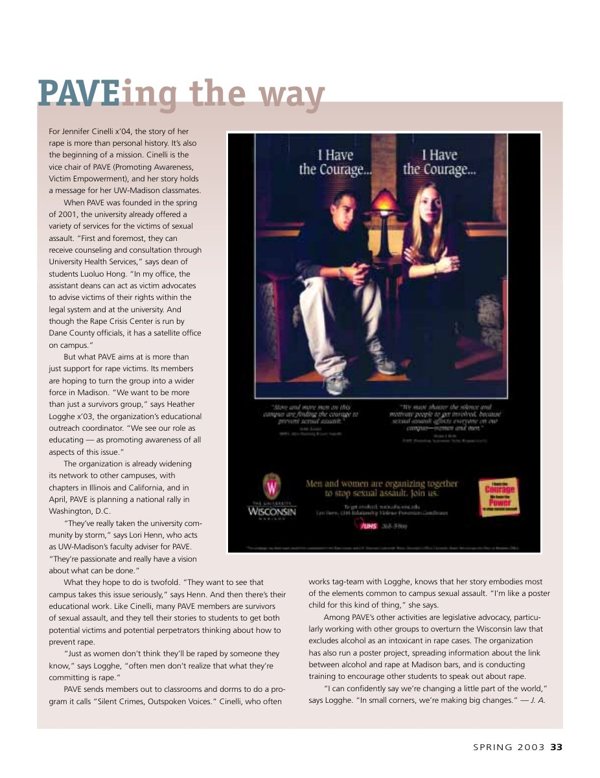
“PAVEing the Way,” On Wisconsin, Spring 2003, on PAVE’s peer education at UW–Madison and Silent Crimes, Outspoken Voices. Read the article (PDF)
How this work began is a longer story, and it lives on my About page. The roots of my advocacy →
It was never an early interest that turned into something else. The work continues.
Responding to harm without repeating it is also the core of trauma-informed care, in surgery and beyond. More on that, and on physician mental health and licensing reform, on Mental Health in Medicine.
If you or someone you know is experiencing domestic violence: National Domestic Violence Hotline, free and confidential, 24/7 · 1-800-799-7233 · text START to 88788
Health equity, access & institutional responsibility
Who receives care, and who is accounted for
Health is shaped far upstream of any clinic: by land and environment, by poverty, by who can travel for care and who can’t, and by whose exposures are studied and whose are ignored. Some of the most important advocacy I have been part of didn’t look like speaking out. It looked like building the systems that make care and evidence possible.
World Trade Center Medical Monitoring Program, 2004–2006
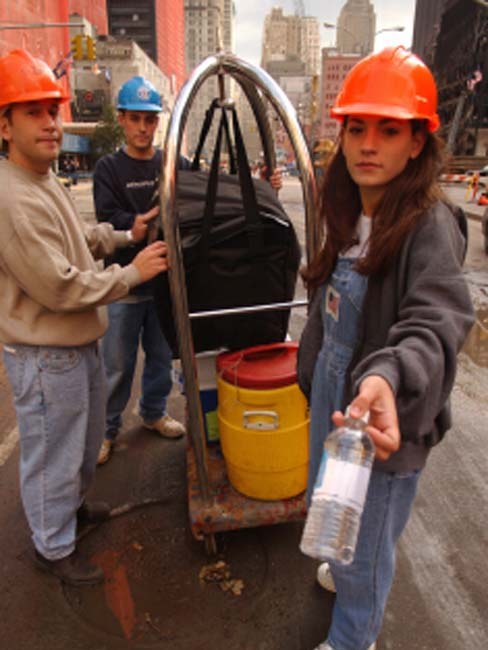
At Mount Sinai’s World Trade Center Medical Monitoring Program, in the Department of Community and Preventive Medicine, I worked as part of a much larger effort to ensure that rescue and recovery workers exposed during and after September 11 received the medical attention, long-term monitoring, and research their exposures warranted.
My part was behind the scenes: assisting with quality assurance, questionnaire development, and domestic violence research consultation, helping put in place the patient-monitoring and referral systems that supported coordinated medical screenings, and helping train clinical staff to use them. It meant recognizing an ongoing responsibility to people whose health had been placed at risk, and helping build what was needed to understand and respond to those risks over time.
Ride for World Health, 2006
In the spring of 2006, I rode in the inaugural Ride for World Health, a group of medical and pre-medical students cycling more than 3,000 miles from San Francisco to Washington, D.C. Along the route, riders spoke at medical schools and community centers about global health, women’s health, and access to care. By the time the ride reached Washington, it had raised nearly $130,000 for global health, with donations still arriving.

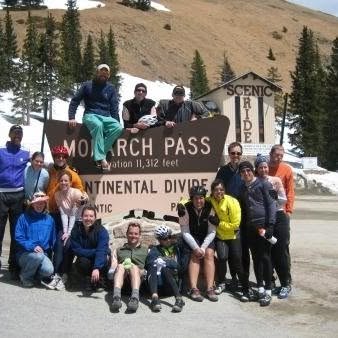

Also covered in Pulse, New Jersey Medical School, Summer 2006 (PDF).
Access, equity, and human rights
- 2003Community health and human rights exchanges in Honduras and Nicaragua: clinics serving environmentally affected communities, environmental justice organizing, a center caring for survivors of torture and their families, and youth health education through media. Physicians for Human Rights leadership training the same year.
- 2005One of 15 women selected for the Women’s Empowerment Institute, a Capitol Hill advocacy and leadership program sponsored by the American Medical Student Association.
- 2005–2009With the Haven Coalition in New York City (2005–2006) and ACCESS/Women’s Health Rights Coalition in Oakland (2007–2009), helped people traveling for reproductive healthcare with transportation, housing, meals, and support.
- 2007Hosted AMSA’s national Primary Care Leadership Training Program on health disparities, leadership, curricular reform, and health policy, for 20 medical and 20 dental students selected nationally.
- 2008–2012Liaison to the Student National Medical Association, the Latino Medical Student Association, and the Native American Health Association.
- 2008–2009Took part in UCSF’s 2008 commemoration of Juana Alicia’s SANARTE murals, and hosted “American Apartheid: Notes on Race, Ethics and US Medical Education” with Harriet Washington.
- 2011–2012Founded the Student Health Equity Alliance at UCSF, connecting clinicians, trainees, and scientists to address health disparities.
Black women’s health
In 2024, Black women in the United States died of maternal causes at more than three times the rate of White women: 44.8 versus 14.2 deaths per 100,000 live births (CDC, 2026). Black women are also 38% more likely than White women to die of breast cancer, despite slightly lower incidence (American Cancer Society, 2025). These are not new numbers. What would it take for them to change, and who gets to study why they exist?
That second question is not abstract. In March 2025, with the study more than halfway through, the National Institutes of Health ended funding for a Detroit study of nearly 600 Black mothers and their babies, led by epidemiologists Jaime Slaughter-Acey and Dawn Misra, which asked how stress from poverty and racism may shape outcomes such as preterm birth. NIH said the award “no longer effectuates agency priorities” (Michigan State University, May 2025). In its series When Care Gets Cut, in an installment with family physician Dr. Bayo Curry-Winchell, Take Back Trust put it plainly: “We cannot fix what we refuse to study.”
Behind the numbers are stories. After giving birth in 2017, Serena Williams, who has a history of blood clots, had to insist on the CT scan that found a clot in her lungs; a nurse suggested her medication was making her “talk crazy” (in her own words, Elle, 2022). After her second cesarean, at the Reno hospital where she was a medical director, Dr. Bayo Curry-Winchell told her nurse again and again that something was wrong and was told she was fine. She was bleeding internally and needed surgery and a transfusion (Ms., 2026). One of the most famous athletes in the world, and a physician in her own hospital. If they had to fight to be believed, what happens to everyone else?
It connects to threads elsewhere on this page: helping people reach reproductive care, hosting Harriet Washington at UCSF, and who gets to become a surgeon. On my bookshelf: Say Anarcha, about the enslaved women on whom J. Marion Sims developed his fistula operation; Washington’s Medical Apartheid; Uché Blackstock’s Legacy; and Passion and Purpose: Black Female Surgeons.
What each of us can do
More than 80% of pregnancy-related deaths in the United States are preventable (CDC, 2022). Prevention is something people do, one decision at a time. Here is where I would start.
Everyone
- Learn the urgent maternal warning signs. They matter for a full year after a pregnancy, not just until delivery. If you or someone you love has one, say out loud: “I am pregnant,” or “I was pregnant in the last year.”
- Find, or nominate, a clinician who listens on Clinicians Who Care, Dr. Bayo’s crowd-sourced list (more on Patient Voices).
- Give to, and share the work of, the Black-led organizations below.
- Ask your representatives about a full year of postpartum Medicaid coverage, insurance coverage for doulas, and research funding for Black maternal health.
Clinicians & practitioners
- Believe her. When a Black woman tells you something is wrong, work it up as if it is.
- Ask about pregnancy in the past year, in the emergency department, urgent care, clinic, and before surgery. More than half of pregnancy-related deaths happen between a week and a year after delivery, and among Black women the leading cause is cardiac (CDC, 2022). Postpartum chest pain and shortness of breath deserve a full workup.
- Use what already works: the AIM patient safety bundles for hemorrhage, hypertension, and more, and CDC’s Hear Her materials for your team.
- Look at your own outcomes by race and ethnicity. We cannot fix what we refuse to measure.
- Offer breast cancer risk assessment by age 25, as the American College of Radiology now recommends for all women, and especially for Black women.
White clinicians
- Check what you were taught. In one study, about half of White medical students and residents endorsed false beliefs about biological differences between Black and White people, such as thicker skin, and those who held more of them rated a Black patient’s pain lower and made less accurate treatment recommendations (Hoffman et al., 2016).
- Learn the history our training left out, beginning with Anarcha, Betsey, and Lucy, and with Medical Apartheid.
- Do the work yourself instead of handing it to Black colleagues, who already carry more than their share of committee, mentoring, and diversity work.
- Sponsor, not just mentor: put Black women’s names forward for roles, invitations, authorship, and pay.
- When you see a patient dismissed, say something, in the room if you can.
Organizations leading this work
Accounts to follow on Instagram Clinicians and organizations moving Black women’s health forward
- @doctor.bayoDr. Bayo Curry-Winchell, family physician in Reno, founder of Clinicians Who Care, and host of Beyond Clinical Walls · doctorbayo.com
- @ucheblackstockmdDr. Uché Blackstock, emergency physician, founder of Advancing Health Equity, and author of Legacy
- @doccrearperryDr. Joia Crear-Perry, obstetrician-gynecologist and founder of the National Birth Equity Collaborative
- @blackmamasmatterBlack Mamas Matter Alliance, home of Black Maternal Health Week, April 11–17
Know an account that belongs here? Tell me.
Figures: CDC National Center for Health Statistics, final 2024 data (published March 2026); American Cancer Society, Cancer Facts & Figures for African American/Black People, 2025. Preventability and timing: CDC, 2017–2019 Maternal Mortality Review Committee data (released September 2022). Pain beliefs: Hoffman et al., PNAS, 2016. Breast cancer risk assessment: American College of Radiology, 2023. Last checked October 16, 2026.
The idea that some lives matter less is the root of all that is wrong with the world.
Representation, visibility & community
Who gets to take part
The movements people know came after years of quieter work. In 2011, as a medical student, I founded the Association of Women Surgeons’ Twitter presence and helped recruit and mentor its contributors. Later I helped grow the Resident and Associate Society of the ACS’s Twitter team from one person to thirty-five, and co-founded #obsm, a monthly chat that brought patients, surgeons, and other professionals into the same conversation about obesity.
The question that interests me isn’t reach. It’s how communication networks change who participates in professional conversations, and what it takes to turn that participation into institutional change.
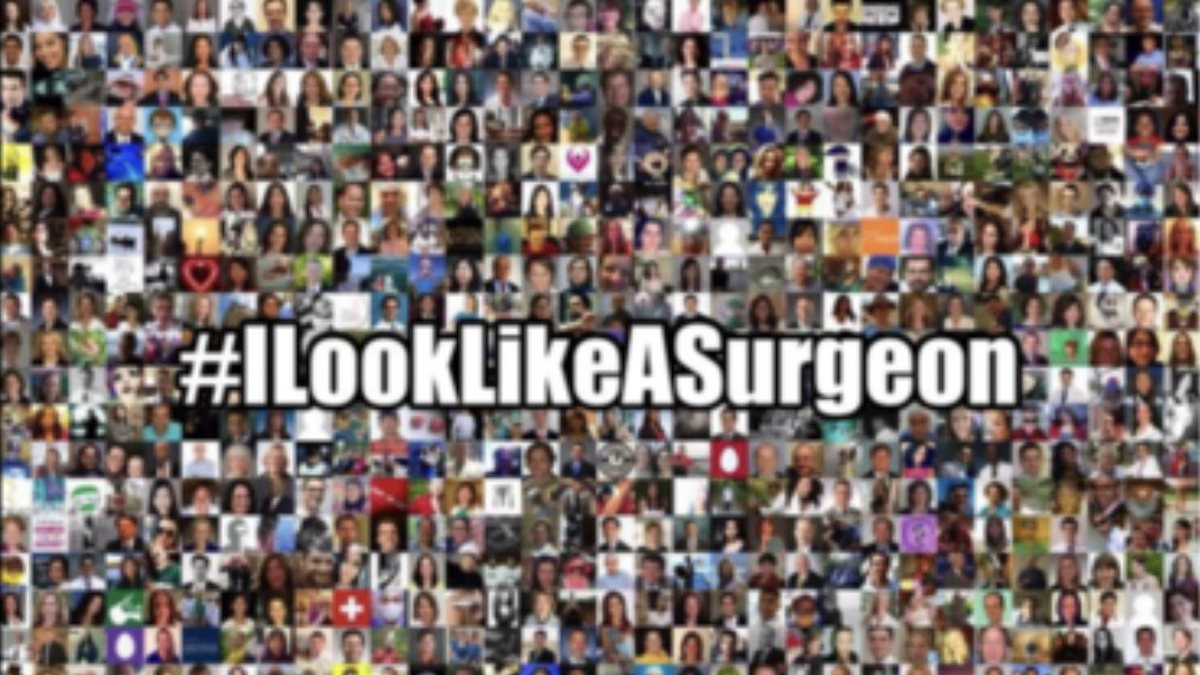
Visibility is a beginning. A community can grow online without changing the institutions its members return to on Monday morning, which is why this work has always needed the next section, too.
Institutions, policy & collective action
Working within institutions, and acting together
Committees, governance, and public comment offer a seat where decisions are discussed. They can shape a policy’s wording, bring forward evidence, and keep an issue on the agenda. They rarely decide the outcome. Collective action works differently: it changes what an institution has to negotiate. I’ve worked both ways, and they are not the same thing.
- 2004, 2007Served on reference committees of the American Medical Student Association House of Delegates, weighing testimony and making recommendations on membership and medical education policy.
- 2007–2009Served on UCSF’s Chancellor’s Advisory Committees on the Status of Women (2007–2009) and on Diversity (2008–2009).
- 2012Received the UCSF Chancellor’s Award for the Advancement of Women, in the student category.
- 2016–2019With the Resident and Associate Society of the ACS: wrote professional social media guidance for surgeons with its Advocacy and Action Committee, published as a society statement in 2017, and later served as its Social Media Chair.
- NowThrough AOSA, working toward organizational comment, and encouraging individual comment, on the requirements and policies that shape surgical training.
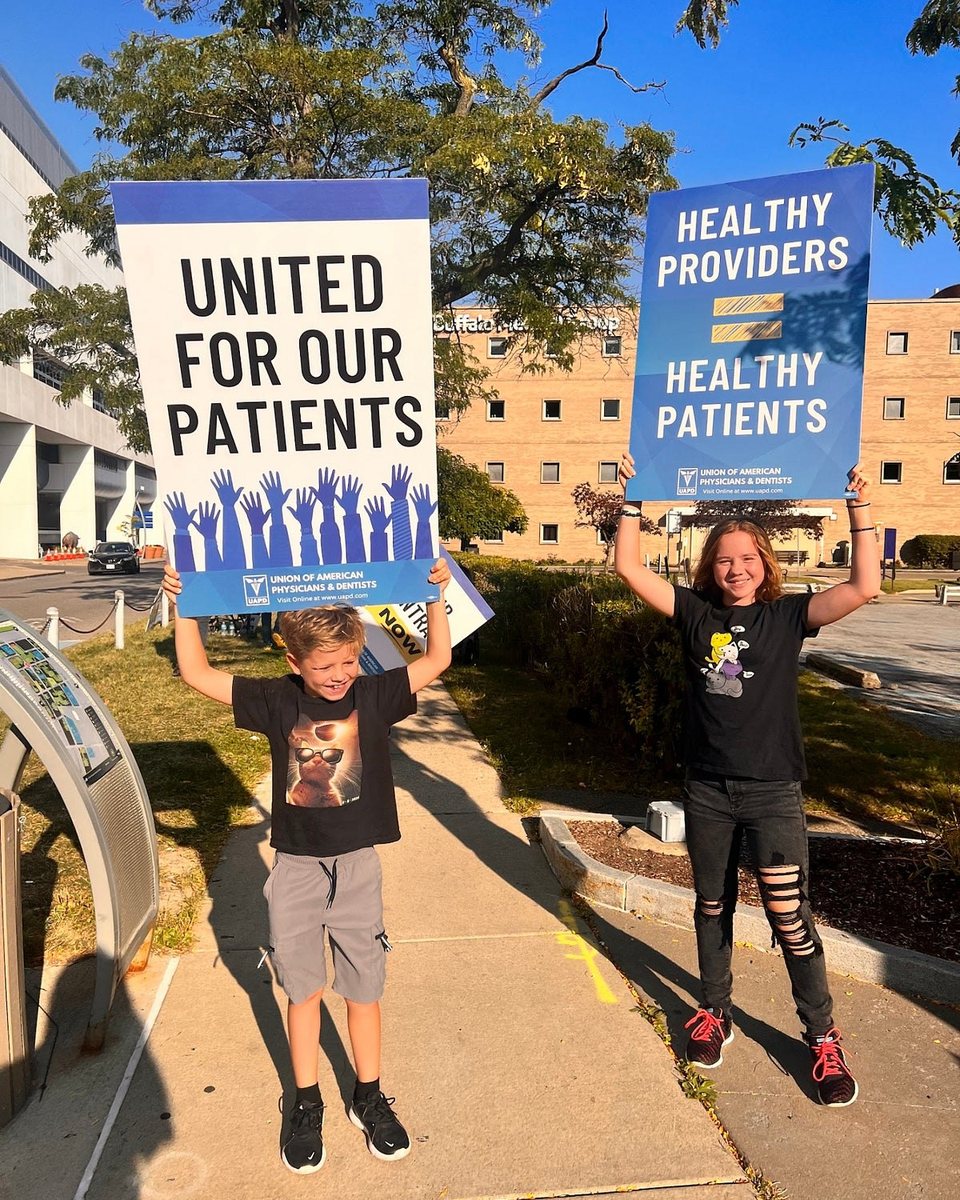
Buffalo resident physicians: collective action, 2024
During my general surgery residency at the University at Buffalo, residents and fellows represented by the Union of American Physicians and Dentists (UAPD) organized around compensation, affordable health coverage, and working conditions. In September 2024, after prolonged negotiations, the union, which represents more than 800 residents and fellows, held a four-day strike.
I wrote about what was at stake for residents and their families in an op-ed for The Buffalo News arguing for affordable medical coverage. The argument did not rest only on what working conditions mean for patients. Physicians’ families deserve access to healthcare in their own right.
On December 13, 2024, residents and fellows ratified their first union contract with a 96% vote. It included salary increases, caps on health insurance premiums, a professional development fund, a labor-management committee, peer representatives, and grievance protections. It was a collective result, won by people acting together.
The strike made concrete a distinction I had been circling for years: the difference between asking an institution to change and having enough collective leverage to negotiate the conditions under which we train, work, and care for patients.

Visibility is not the same as power. Awareness is not the same as prevention. And being encouraged to speak is not the same as being safe to speak.